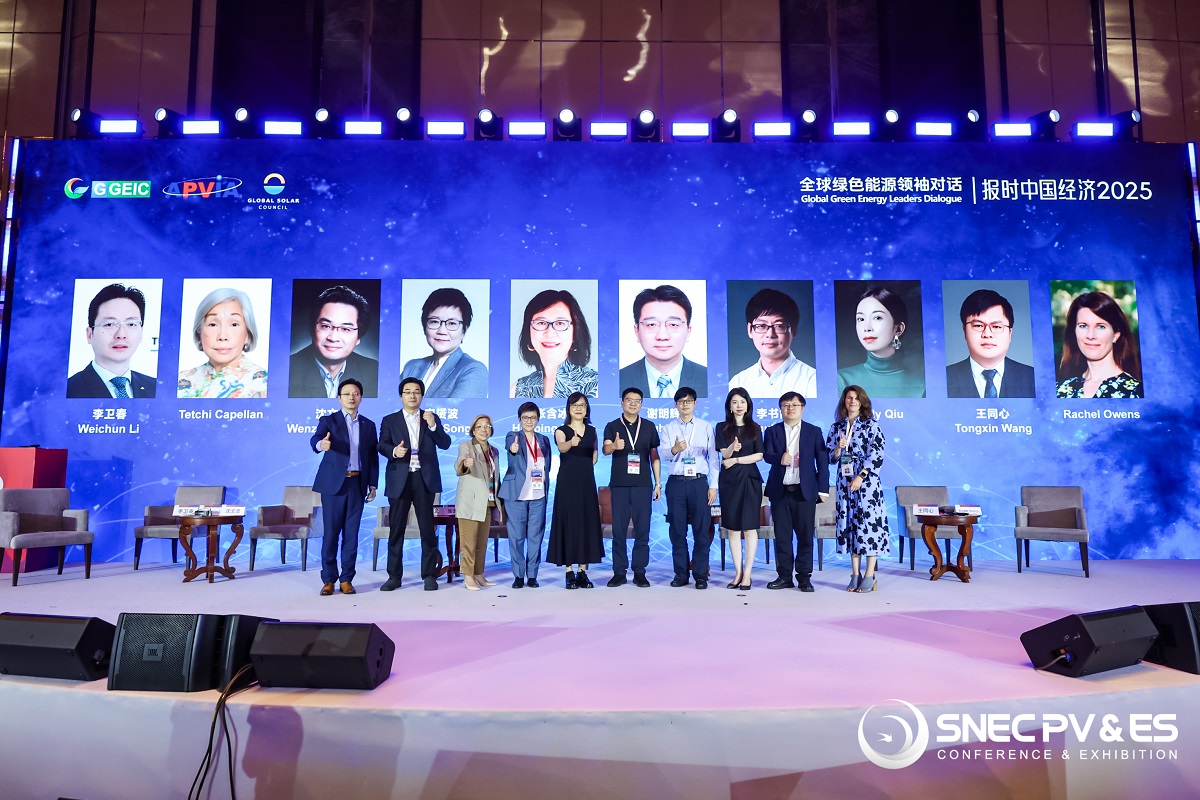
As China’s 14th Five-Year Plan draws to a close and the 15th Five-Year Plan takes shape, energy storage and hydrogen energy are emerging as strategic pillars of the global clean energy transition. Against the backdrop of accelerating energy restructuring and China’s dual-carbon commitments, the 2nd Energy Storage & Hydrogen Industry Investment, Finance and Sustainable Development (ESG) Financial Summit, held at the Shanghai New International Expo Centre on Saturday, 11 October 2025 (09:30–16:00), brought together leading voices from government, industry, academia, research, and finance to chart the path forward.
The Summit’s central theme — RWA: Building a New Financial Ecosystem for New Energy — reflected a decisive shift in the sector’s investment logic: from pure scale expansion toward a three-dimensional validation framework centred on technology, cost, and application scenarios. Particular emphasis was placed on the convergence of digital technologies — including blockchain and AI — with the new energy sector, with blockchain-based tokenisation of physical energy assets presented as a means to improve asset liquidity and financing efficiency. Investors were called upon to identify precise positioning across technology barriers, closed application scenarios, and international capabilities in order to capture long-term value amid growing industry differentiation.
The Summit’s programme was structured around three interconnected tracks: policy interpretation, technology showcase, and capital matchmaking, together designed to foster a sustainable innovation-investment-application ecosystem. High-level participants included representatives from the China National Institute of Standardisation, State Grid-affiliated bodies, domestic and international industry associations, analytical institutions, and leading enterprises in energy storage and hydrogen, alongside senior analysts from financial and crowdfunding institutions.
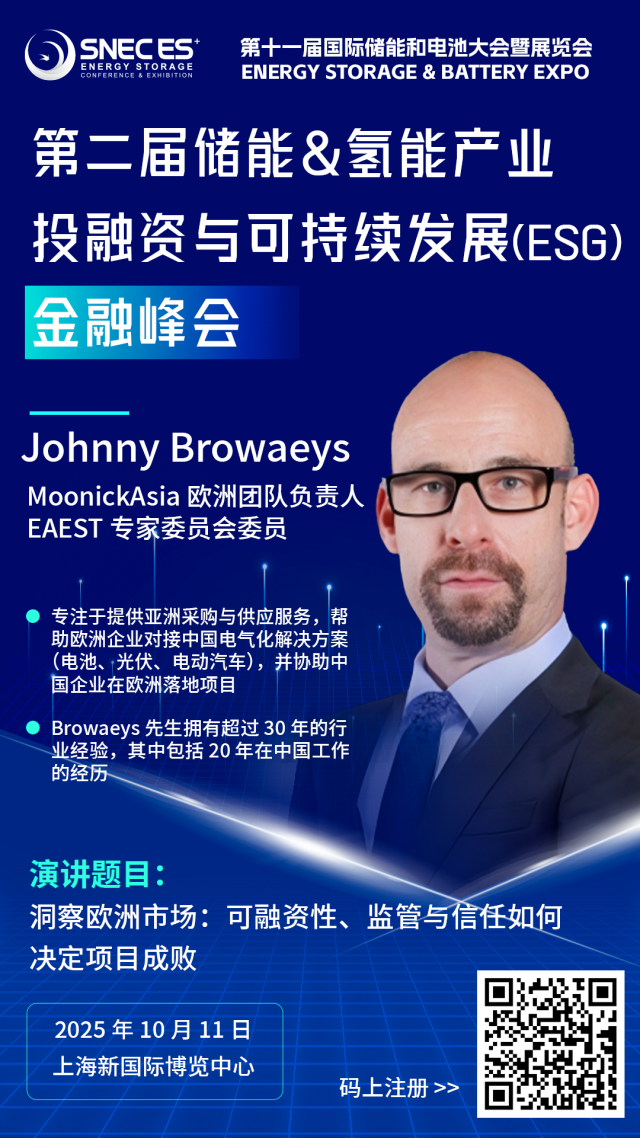
Johnny Browaeys, a member of the EAEST Expert Committee and Europe Team Lead at MoonickAsia, was invited to address the Summit. MoonickAsia is an agile consortium of sourcing and procurement professionals specialising in Asia-Europe supply chain services, helping European companies access Chinese electrification solutions — including batteries, photovoltaics, and electric vehicles — while supporting Chinese companies in delivering projects across Europe.
Mr. Browaeys brings more than 30 years of international experience, including two decades based in China. A former Chair of the European Chamber of Commerce in China, he has held executive roles at European, American, and Chinese organisations operating across the environmental, oil and gas, chemical, pharmaceutical, agricultural, and renewable energy sectors. He specialises in East–West collaboration spanning industry, policy, and academia, with deep expertise in ESG, cleantech, energy transition, and product stewardship.
His presentation, titled “Understanding Europe’s Market: How Bankability, Regulation, and Trust Shape Project Success”, addressed one of the most persistent challenges facing Chinese suppliers and investors entering European markets: the reality that clean energy projects in Europe rarely fail on technical grounds, but frequently stall due to financing constraints, permitting complexity, and regulatory uncertainty. Drawing on a decade of lessons learned by European developers — from supplier-backed financing structures to more sophisticated risk-sharing mechanisms — Mr. Browaeys outlined how Chinese stakeholders can align with European risk frameworks, build the trust required by local partners and financiers, and avoid the most common pitfalls encountered in cross-border project delivery.
EAEST is proud to have Mr. Browaeys representing the association’s expert voice at this important international forum, and looks forward to continued engagement at the intersection of European energy policy and global clean energy investment.