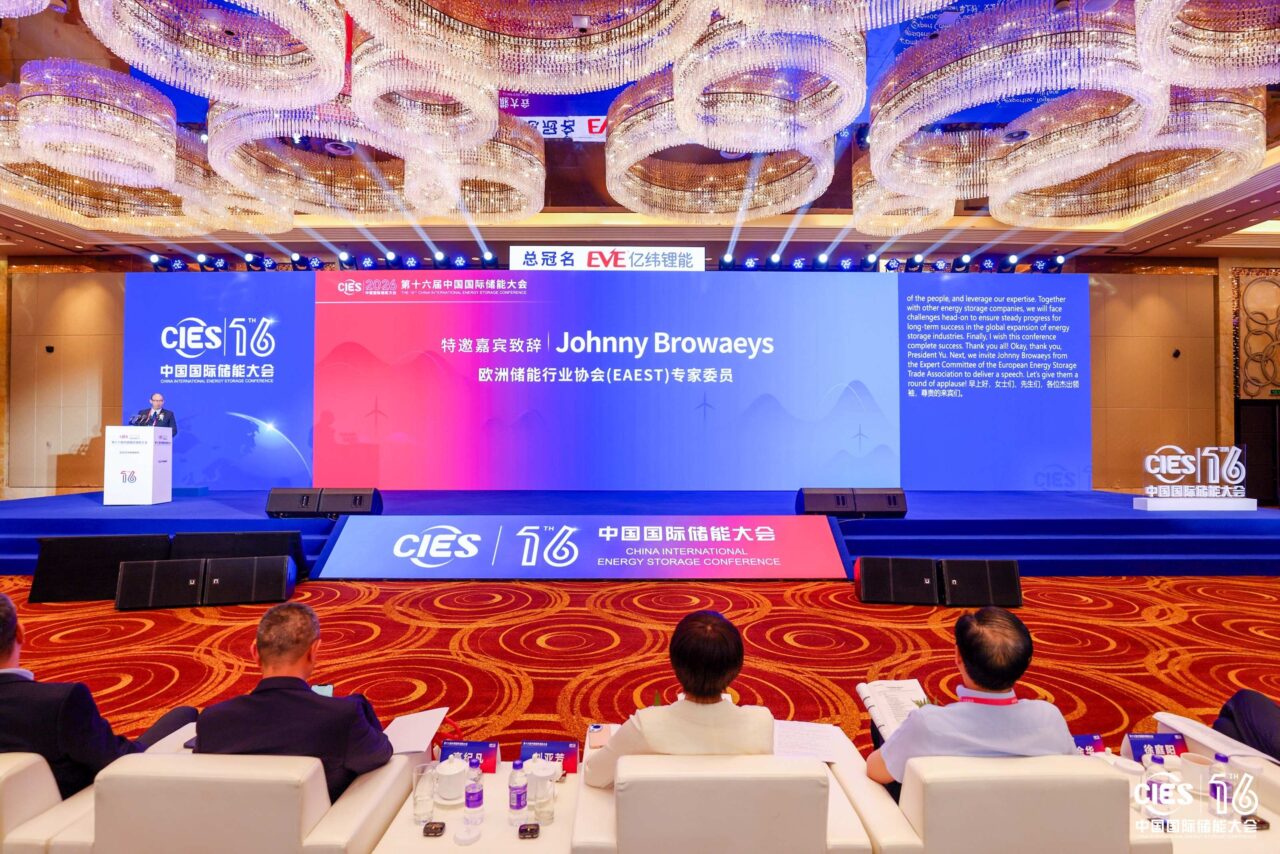
On 10 August 2026, the 16th China International Energy Storage Conference (CIES 2026) opened at the InterContinental Hangzhou, bringing together more than 3,500 guests from over 1,050 companies across the energy storage supply chain, with more than 90,000 additional viewers following online. Under the theme “Source-Grid-Load-Storage, Computing-Power Synergy,” the two-day conference covered topics including storage pricing mechanisms, the power market, safety standards, long-duration storage, and international cooperation, with more than 150 speakers participating across the two-day programme.
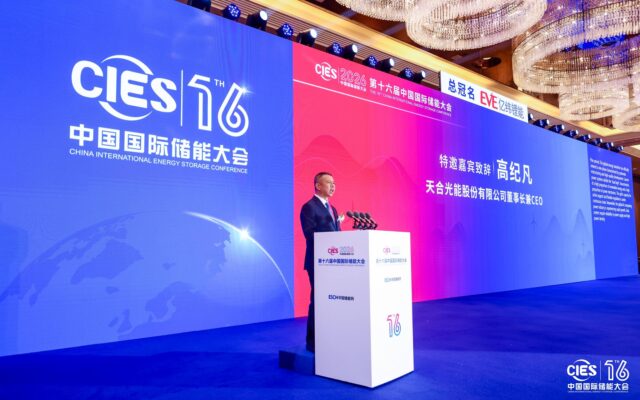
EAEST Expert Committee member Johnny Browaeys was among the invited speakers, delivering remarks alongside Gao Jifan, Chairman and CEO of Trina Solar, and Zhang Haibo, Chairman of Nanjing GOLEN Electric Power Technology, who also addressed the ceremony, along with many other leading entrepreneurs from the industry’s top companies.
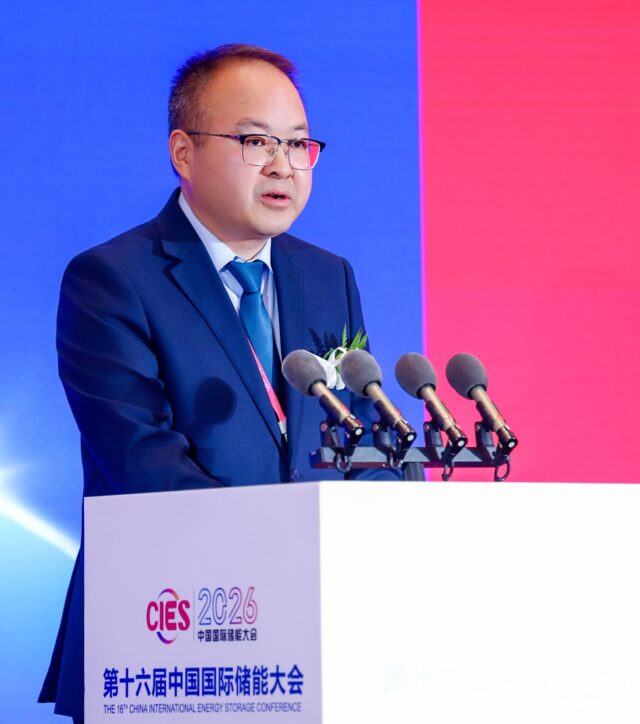
In his remarks, Johnny noted that China is demonstrating unmatched innovation, speed, and industrial scale in power batteries, long-duration energy storage, and AI data centre power solutions, building not just larger storage deployments, but the next generation of energy systems that bring power and computing power together.
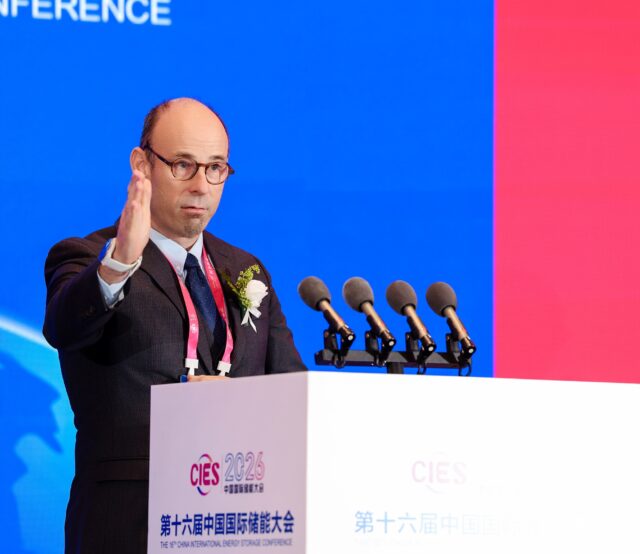
Turning to Europe, Johnny described a growing convergence of energy and computing power: AI data centres are adding new load pressure to local grids, while renewable energy has moved from an environmental goal to an economic and strategic priority. Energy storage, he said, has become a key hub connecting generation, grid, and load, while also supporting the power needs of computing infrastructure. He expressed EAEST’s hope for closer collaboration between the Chinese and European energy storage industries.
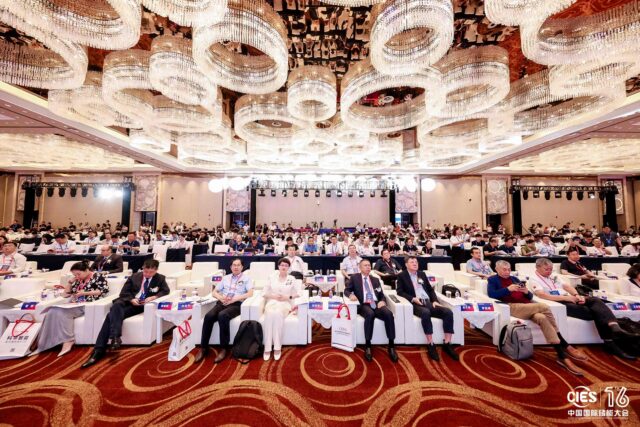
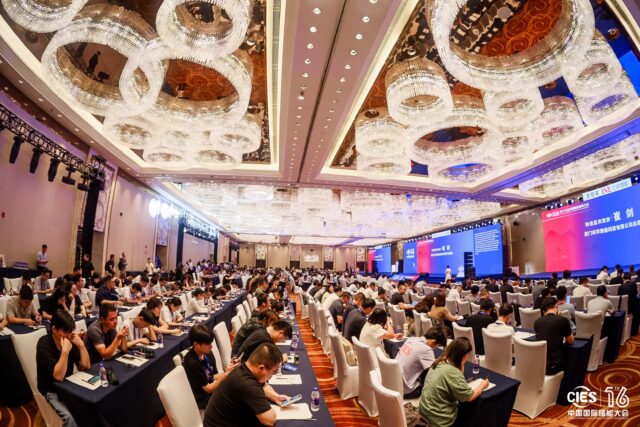
The conference also saw the release of several industry research reports, including the 2026 China New-Type Energy Storage Industry Development White Paper.
To bring the point to life, Johnny shared two success stories he called “Rabbits and Dragons,” showing how Chinese and European companies can combine very different strengths.
The European Rabbit and the Chinese Dragon. A nimble European startup knows the residential energy market and how to reach it. A Chinese battery giant can manufacture exactly what the rabbit needs, at dragon scale and cost. The clever part: the batteries are designed to be managed locally in Europe, combining Chinese hardware strength with European market, regulatory and energy-management know-how. The dragon gets into Europe at rabbit speed; the rabbit suddenly competes at dragon scale.
The European Dragon and the Chinese Rabbit. Now reverse the roles. A major German developer sits on a huge pipeline of energy projects. A small Chinese AI company brings specialised, localised models that can screen that pipeline at extraordinary speed and low cost, helping turn projects into investable opportunities and connecting them with capital. The European dragon has the scale; the Chinese rabbit gives it speed.
“Sometimes China is the dragon. Sometimes Europe is,” Johnny said. “The opportunity starts with understanding which strengths each side brings, and what becomes possible when you put them together.”